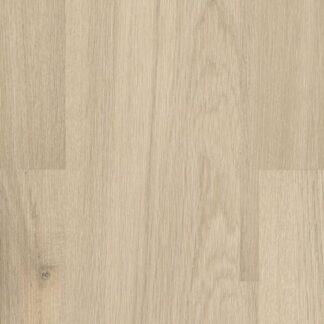

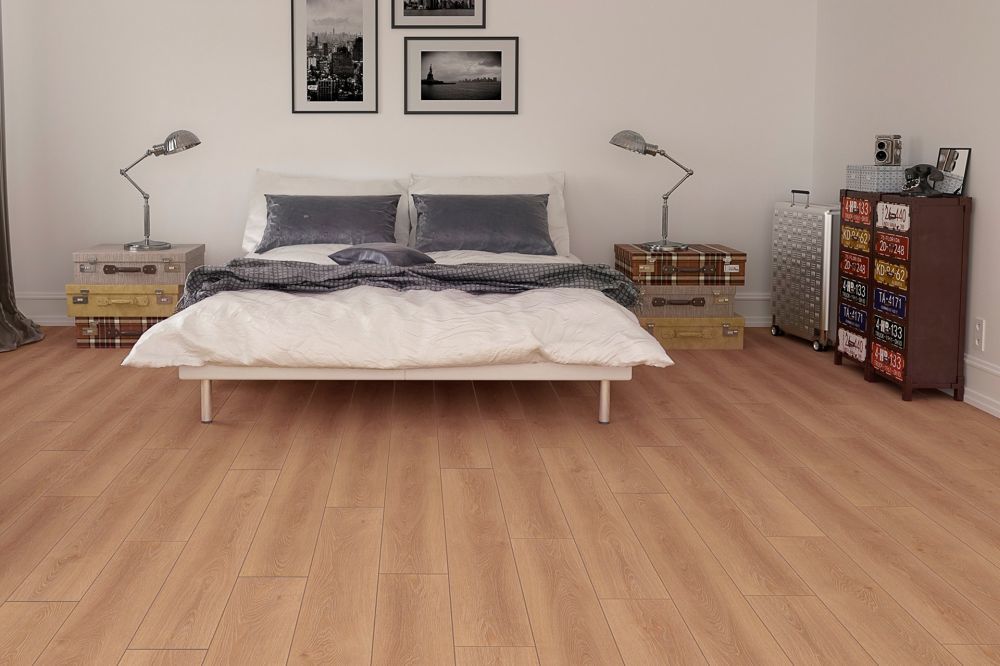
Description
- Wood type – Oak
- Joint – 4V
- Size – 1295 x 193mm x 8mm
- Thickness – 8mm
- Class – 32
- Wear layer – Ac- 4
- Certifications – Blue angel, tse, l2c, iso 9001, ce
Laminate flooring
Laminate flooring is the most common type of multi-layer synthetic flooring that is encountered indoors in daily life. The general composition of laminate flooring consists of three layers. The base layer of laminate flooring is a waterproof layer under the floor, which increases structural stability and acts as a moisture barrier. The thick middle layer is a wood composite sole. The uppermost layer of laminate flooring is its wear-resistant surface and decorative layer, which can consist of more than one layer, depending on the production process. The surface coating of laminate flooring consists of cellulose treated with a special artificial resin to provide a hard and durable surface.
Laminate Flooring Advantages
- Laminate floors are durable, resistant to scratching and abrasion thanks to their special hard surface coatings.
- They are flame-resistant products with their heat-proof properties.
- Laminate floors are products that either fade quite late or do not fade at all, even if they are directly exposed to UV rays.
- Assembly is quick and easy.
- Thanks to the Blue Angel Certificate found in laminate flooring, you can achieve healthier floors.
- Thanks to these anti-allergic products, the powders have no place to hide.
- Can be used with an underfloor heating systems as it transmits the heat.
- It is long-lasting.
- While it is easily placed with its non-slip feature;
Joint Laminate Flooring
The joints in parquets are not like the joint gaps found in tiles or ceramics. When ceramics are called joints, a gap is left between them, while laminates do not leave any gaps in parquets. After the joint laminate flooring application is completed, there is no joint filling process. The joint found in laminate flooring; It is a 1mm wide V-shaped projection at the junction of two laminate plates. When the two plates are joined, this V-shaped protrusion between them adds an image of space to the parquets. However, this is not a gap in reality, it is just an image. Normally, in jointed parquets, the plates are in a complete union.
Grooved parquets are no different from jointed parquets in terms of cleaning and maintenance. It can be easily cleaned with the help of a cloth. Grooved parquet models generally make the space wider and add a different atmosphere to the environment. It is a model frequently preferred by architects as it creates a more aesthetic appearance.
The issue you need to pay attention to in jointed parquets; that the items on it do not scratch the parquet. In order not to damage the intersection points, be careful not to drag your belongings while carrying them. In this way, your parquet will last much longer.
Parquet Classes – Parquet Abrasion Classes
When choosing your laminate flooring, which is one of the important parts of home decoration, it is useful to know the knowledge of etching classes. Parquet classes show that the durability and quality increases as you go from small to large. Parquet classes are generally divided into 21, 22, 23, 31, 32 and 33. Parquet wear classes are also grouped as AC3, AC4, AC5, and these groups indicate the durability of the parquet.
- Class 21 and 22 parquets are preferred in places where human density is very low.
- 32nd and 33rd class parquets are preferred in places where there is a lot of people.
- The most ideal parquet in home designs is the 31st class parquet.
(AC3) class laminate floors: preferred in rooms with a small load and walking density. They are the most preferred and the most affordable products in terms of price.
32 (AC4) class laminate floors: preferred in rooms with an average load weight. It is one of the ideal parquet types that are not high-priced.
(AC5-6) class laminate floors: They are preferred in rooms with an intense load.